
How to choose bathroom finishes that work together
Choose wall, floor and furniture finishes together. A small set of colours that work well together makes a bathroom easier to plan.
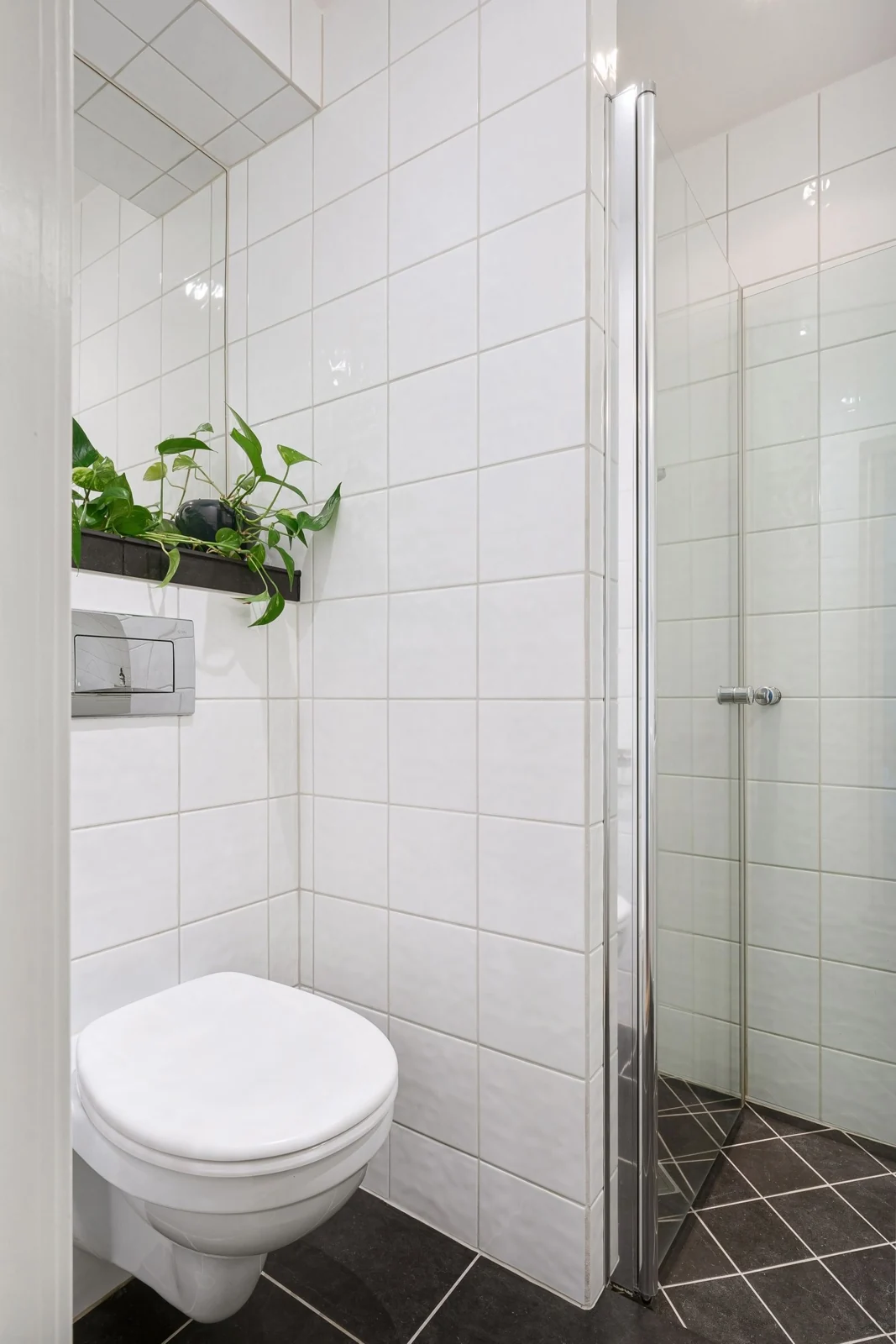
Choose one starting point
Begin with the material or item you most want in the room: a vanity, floor, wall finish or bath. Use that to guide the simpler finishes around it.
If the wall surface has a strong pattern, try simpler furniture and flooring. If the room is mostly plain, a more expressive vanity or fitting can become the focus.
Compare physical samples
Place the samples beside a white basin or toilet sample where possible. Look at them in daylight and under the lighting you expect to use. Screens can change the appearance of colour and texture.
Check a larger example of a patterned finish before buying. A small sample may not show how the pattern repeats across a wall or floor.
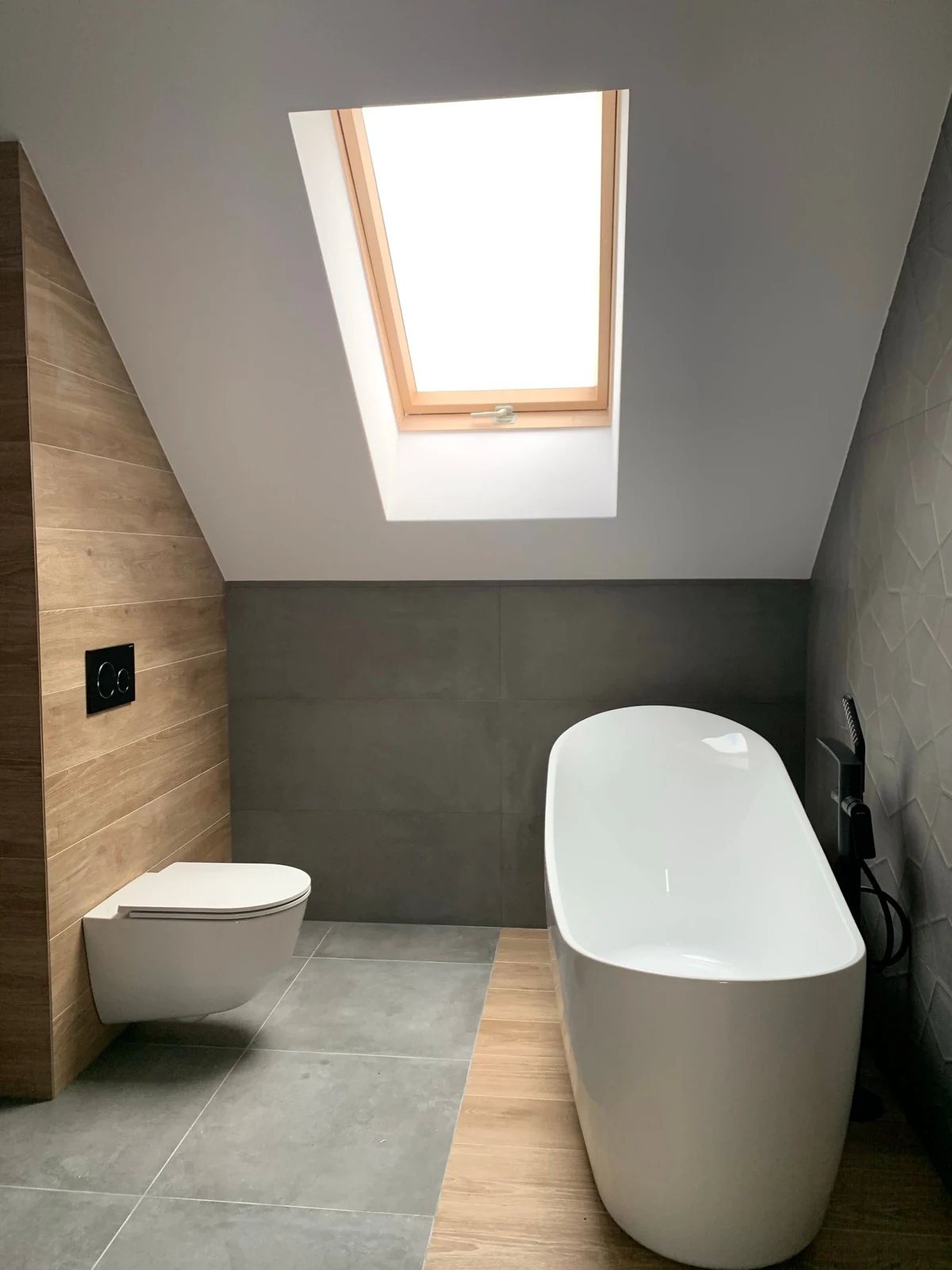
Coordinate rather than over-match
Consider tap, screen, handle and towel-storage finishes together. Similar-looking products from different ranges can vary, so compare the actual references rather than relying on a colour name.
You can mix finishes deliberately, but too many competing details make a compact room busy. Keep the main choices easy to explain.
Check how to clean your bathroom finishes
Ask about suitability, cleaning products and maintenance. Think about water marks, joints and access around the fittings. A finish that suits the room and your routine is more useful than one chosen only for an image.
Build a small, useful sample board
Place the main wall finish, floor sample and vanity colour together on a plain surface. Add a reference for the tap and screen finish, along with the white of the basin or shower tray. This makes the relationships easier to see than browsing each product separately. A warm grey and a cool grey can look similar on individual screens but feel different when placed beside each other.
Move the samples into the bathroom where possible and view them at different times of day. Pay attention to the surfaces that cover the largest area. A finish that looks lively on a small sample may feel busy across every wall. Keep photographs as a record, but use the actual samples for the final judgement because a phone camera can alter the appearance of colour and contrast.
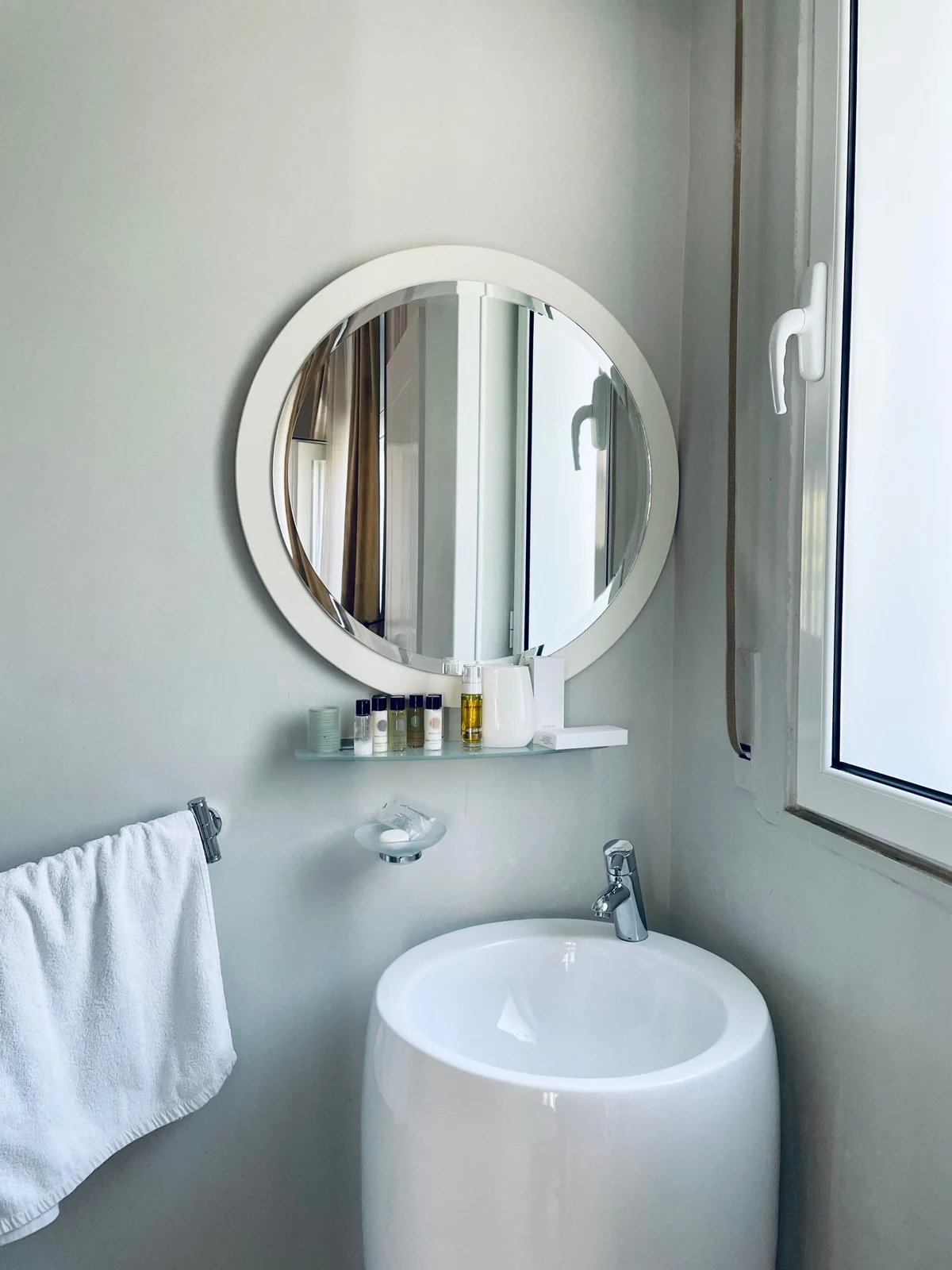
Give the room one main focus
A compact shower room can feel coordinated with a distinctive vanity and plainer walls, or with a patterned wall and simpler furniture. Decide which element you want to notice first. That does not mean every other surface must be plain, but it gives you a reason to accept or reject additional patterns. Repeating one colour or material in a few places can be enough to connect the room.
Useful storage belongs in this decision too. Consider whether toiletries will be visible on shelves or hidden in drawers, because the finished room will contain everyday belongings. A photograph of an empty basin does not show that extra visual detail. Read about planning storage in a small en-suite if you are choosing furniture and finishes together.
Check the small metal details together
Taps, screen frames, cabinet handles and towel rails all contribute to the overall appearance. Similar finish names do not necessarily mean an exact match between products. Compare examples or reliable product references before ordering, especially if a slight difference would bother you. A deliberate combination can work, but it helps to repeat each finish somewhere rather than adding an unrelated colour to every fitting.
Look beyond colour to shape and proportion. A very prominent handle may compete with a fine screen frame, while a large tap can look out of scale on a compact basin. Suitability and comfortable use still come first. Ask to assess the basin and tap together and check the selected furniture hardware against the surrounding fittings. Keep model references with the sample notes so that the intended combination is clear.
Choose finishes for everyday use
The bathroom style guides can help you narrow the visual direction, from clean modern lines to warmer timber effects or understated classic furniture. Then compare care requirements for the actual products. Think about cleaning around joints and handles, reaching the shower glass and keeping shelves tidy. A material that suits your routine is more likely to remain a choice you enjoy.
Before confirming the scheme, look at the room as one arrangement: walls, floor, basin, toilet, furniture and lighting. Remove any choice that adds complication without improving the result. Ask which materials and finishes need to be agreed before accurate ordering or fitting can proceed. Keep a final sample record and product list so that substitutions are checked against the whole scheme. A bathroom with matching colours and finishes can be achievable in an ordinary room without oversized fittings or an elaborate luxury setting.
Your next step
Explore the style pages, save the details you like and use them to start a conversation about your own room.
Bathroom Styles in HamiltonPlan your bathroom in Hamilton
Explore fitted bathrooms in Hamilton, then tell us about your room and the changes you have in mind.